
What are you devoted to?
On devotion, repetition, and returning what was never ours

I just returned from co-teaching a retreat at Spirit Rock titled Reclamation of the Sacred: Journey into Refuge, Presence and Love. We spent our days engaging in devotional practices—chanting, bowing, meditating, and creating ceremony together.
If you’ve been on a meditation retreat before, you know it’s a kind of an alternate reality. It was somewhat shocking to re-emerge amidst Black Friday, Cyber Monday, and the relentless march of holiday consumption. The contrast was stark, to say the least.
It made me think: What are we really devoted to?
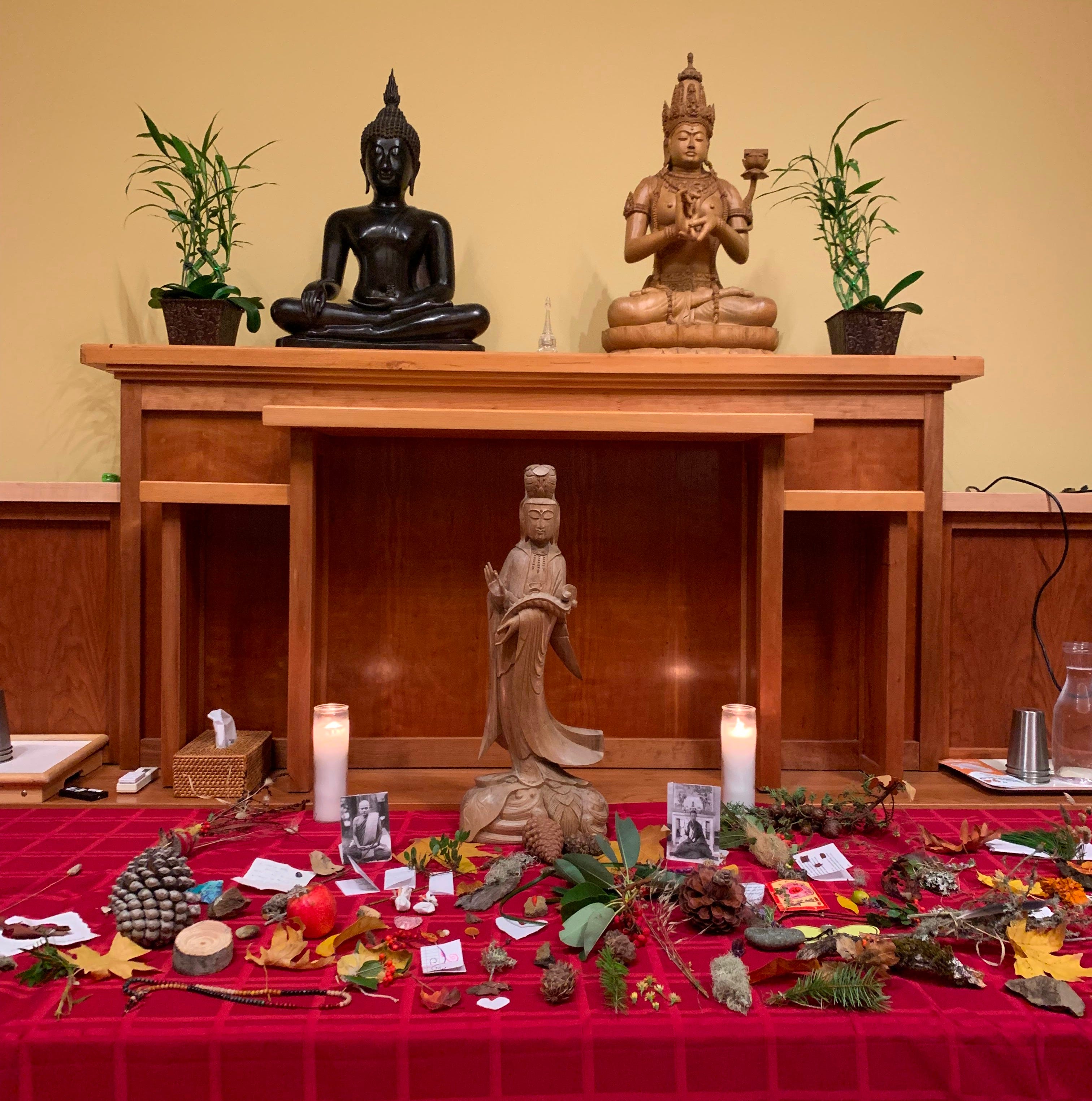
I believe that devotion is everywhere, and it is being expressed all the time. If you ask, many of us would say that we are devoted to family, to friends, to loved ones. But how we spend our time might tell a different story—that we’re devoted to work, to our phones, to burnout, to isolation.
David Loy writes “Our present economic system institutionalizes greed, our militarism institutionalizes ill will, and the corporate media institutionalizes delusion.” The devotional practices our society performs daily are scrolling, consuming, competing. We repeat them without thinking, and this repetition shapes us. But repetition can work in another direction too.
When we tell someone “I love you” over and over, the repetition isn’t adding new information to the relationship, but it is deepening, reinforcing, reminding, and expanding us and the relationship. The same is true for whatever we practice daily: our hearts and bodies learn through repetition. So what are we teaching them?
Thanissara reminds us: “The work of profound systemic transformation is deeply informed by this inner work of transforming our own minds and hearts.”
For some people, devotional practice feels natural. For others, we’re finding our way. Ritual and devotion don’t have to be prescribed, they can be freestyle, following an inner impulse, the expression of the heart. Dhamma teacher Rob Burbea says “The form may be there, the devotion may not be there; the form may not be there, and the devotion may be there.”
Over the course of the retreat, we bowed to the Bodhisattva of compassion, Kuan Yin, and chanted “Namo kuan shr yin pu sa.” In Pali, namo means “to pay homage,” but I’ve heard Kittisaro, one of my teachers, translate it as “I return my life.”
This translation shifts everything. What if true devotion isn’t about accumulation at all, whether it’s things, titles, or experiences? What if it’s about returning, letting go of that which never belonged to us in the first place?
Ways to work with me
✨ Book a Somatic Experiencing™ one-on-one
For BIPOC, 2SLGBTQIA+ folks
In-person near Charlevoix metro on Tuesdays (and Wednesdays for January)
Online via Zoom on Tuesdays and Thursdays (and Wednesdays for January)
💫 Join my online mindfulness community
Some of the benefits members receive include: monthly meetups with me and other members; monthly practice calendar with meditations and talks; online practice series for free
From $30-$12 CAD/month
🎧 Subscribe to my weekly guided meditation podcast
Get meditations delivered to your inbox every Wednesday
Alternatively, you can follow “Mindfulness Meditation with Dawn Mauricio” wherever you get your podcasts
I like the quote from Rob Burbea, from his talk: There are hundreds of ways to kneel and kiss the ground (A Talk on Devotion) — https://dharmaseed.org/teacher/210/talk/10029/